
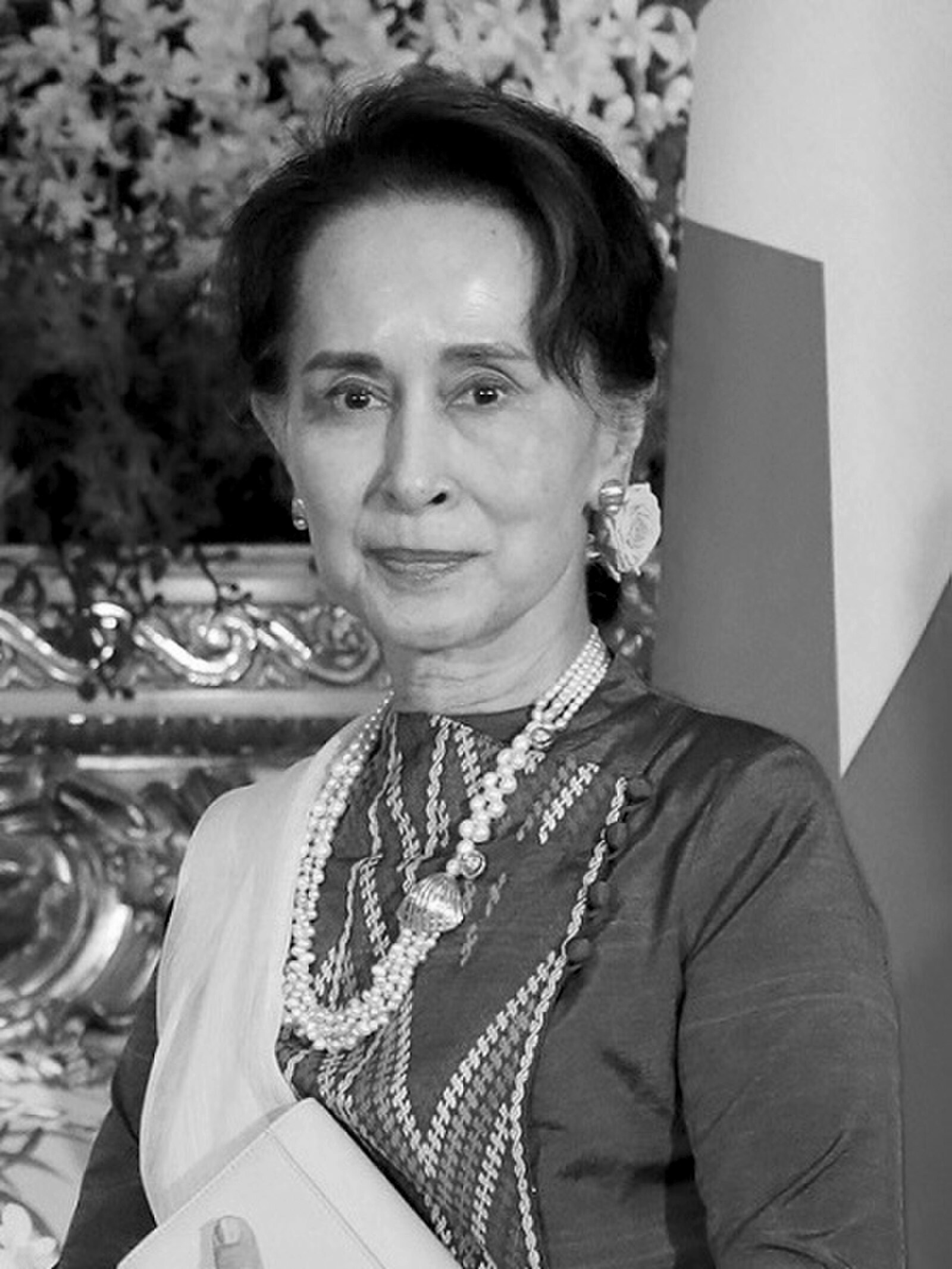
A legendary life
Aung San Suu Kyi
Born June 19, 1945
Myanmar political leader and Nobel laureate whose democratic resistance and later record in government form a complex and contested legacy.
Her story
A life that changed history
Aung San Suu Kyi co-founded the National League for Democracy in 1988 and became an international symbol of nonviolent opposition to military rule, spending many years under house arrest and receiving the 1991 Nobel Peace Prize. She served as state counsellor and de facto civilian leader from 2016 until the military overthrew her government in 2021 and detained her. Her legacy is complex: she faced strong international criticism for her government's response to the military's persecution of Rohingya Muslims, including its denial of documented abuses and her defense of Myanmar against genocide allegations before the International Court of Justice, while the armed forces retained substantial constitutional autonomy from civilian control. Her earlier democratic leadership and later human-rights record consequently remain subjects of sharply contrasting assessments.
“I am standing here because I was once a prisoner of conscience. As you look at me and listen to me, please remember the often repeated truth that one prisoner of conscience is one too many.”
Nobel Peace Prize lecture, June 16, 2012